
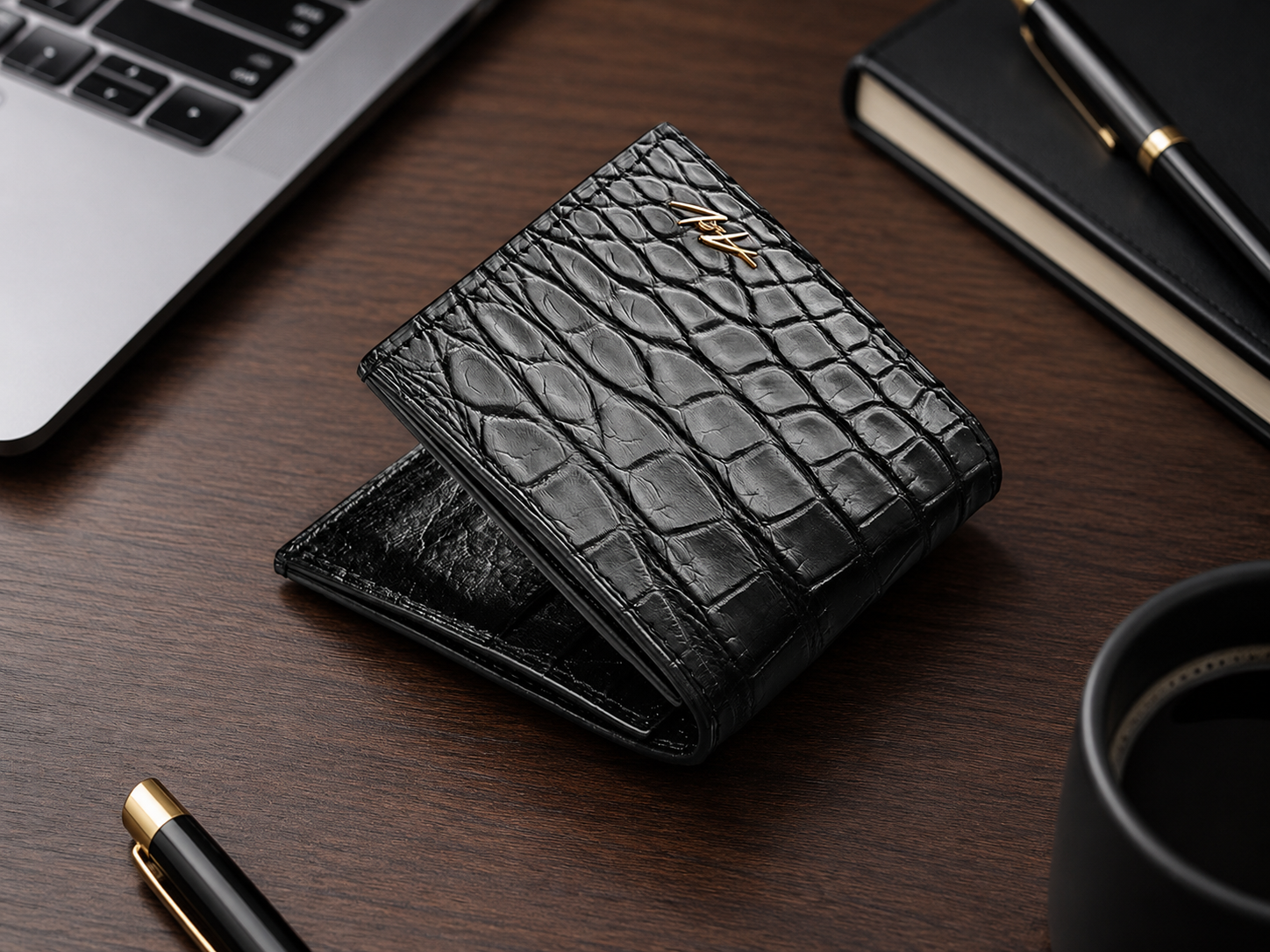
Do Leather Wallets Stretch? What’s Normal, What’s Not, and What to Do
In real use, this usually comes down to a simple distinction: a new wallet can feel firm and still be normal, but it should not feel like you have to fight it every time you pull out a card. If the fit improves with regular carry, the break-in is working. If the slot remains unreasonably tight or already feels loose from the start, the issue may be the design or material quality rather than “normal leather behavior.”
How Much and How Long: What to Expect
Most new leather wallets soften gradually with regular use, but there is no universal timeline. Some wallets feel more comfortable after a few days, while stiffer models may take a week or two to loosen naturally. The result depends not only on the leather itself, but also on slot construction, thickness, and how you actually carry the wallet day to day. In practice, a leather wallet with better structure and cleaner stitching usually breaks in more evenly and keeps its shape longer.
Break-in is usually safer in normal indoor conditions than in heat, direct sun, or damp storage. The main rule is simple: do not try to speed things up by overloading the wallet. If a slot already feels full, forcing in extra cards is more likely to deform it than help it adapt.
If a card slot already feels loose even when empty, or cards start sitting with visible play, full recovery is unlikely. At that point, home fixes may slightly improve the feel, but they usually do not restore the original factory-tight hold.
What Affects How a Leather Wallet Breaks In
Vegetable-tanned vs. chrome-tanned:
Vegetable-tanned leather often feels firmer at first and may take longer to loosen. Chrome-tanned leather is often softer from the start. But neither behaves the same across all wallets: thickness, slot design, lining, and overall construction matter as much as the tanning method.
Finish matters because it affects how leather reacts to moisture, conditioner, and daily friction over time. The same principle applies not only to wallets, but also to accessories like an iPhone 17 leather case, where softer finishes may age faster while coated surfaces usually resist wear more consistently. More exposed finishes are usually less forgiving, while heavily coated leather is often more resistant to minor surface contact. If you are not sure what finish your wallet has, it is safer to avoid experiments.
Thickness matters:
In general, thinner leather tends to loosen faster, while thicker leather usually feels stiffer at first but may hold shape better over time. That said, thickness alone does not decide the result: a poorly designed slot can still feel wrong even in good leather.
A snug fit at first is common, but it is only a good sign if the wallet becomes easier to use without forcing. If the slot stays unreasonably tight, catches the card edge, or stresses the stitching, that is not “quality” — it may simply be poor slot design or overly rigid construction.
How Your Wallet Stretches During Daily Use
In daily use, a leather wallet usually loosens first where the pressure repeats most often: the slot openings and the fold. That is why normal carry does more to shape a wallet than aggressive tricks. If the fit improves on its own, the break-in is working. If the slot stays excessively tight or starts deforming, the problem may be the construction, not a lack of “break-in time.”
Start with the least aggressive option. Most wallets do not need special treatment at all — they just need a few days of normal use. If you try to force a faster result with water, heat, or overstuffing, the risk of damage rises much faster than the chance of a good outcome.
3 Safe Methods to Stretch a Tight Leather Wallet
Start with regular use or dry loading. If that is not enough, body warmth may help a little. Conditioner is optional. Water is a risky last resort and should not be treated as a standard break-in method.
⚠️ General precautions:
- Never soak: Excess water washes out oils, causes stiffness, and can lead to permanent warping.
- Avoid heat sources: Hair dryers, radiators, and direct sun cause drying, cracks, and finish damage.
- Spot-test hidden areas: Before applying any moisture or conditioner to the full surface, test on an inner fold or hidden edge and wait 24 hours.
Method 1: Dry Loading
This is usually the safest place to start because it avoids moisture and aggressive stretching.
- Put in the cards you actually plan to carry.
- Leave the wallet indoors overnight.
- Check the fit the next day.
- If it is still too tight, repeat once or twice before trying anything else.
When to use: New wallet, delicate finish, or any situation where you want the lowest-risk option.
Stop if: The slot edge starts catching badly, the stitching looks stressed, or the leather begins to warp.
Method 2: Normal Carry
Regular carry close to the body may help a stiff wallet loosen slightly over time without adding moisture or forcing the material.
- Load the wallet with the cards you actually need.
- Carry it normally for a few days.
- Reassess the fit before trying stronger methods.
When to use: Mild tightness that already seems to be improving with use.
Avoid: Keeping the wallet under constant heavy pressure while trying to break it in, since that can create uneven bends and wear.
Method 3: Conditioner (Optional and Risky if You Are Not Sure About the Finish)
Conditioner is optional, not a default fix. If the leather feels unusually dry or stiff, a very small amount may help, but if you are not sure about the finish, or the wallet is expensive, it is safer to skip this step than to risk staining or over-softening it.
Step-by-Step
- Apply a very small amount to a hidden area first and wait to see how the leather reacts.
- If there is no visible problem, apply a light amount only where needed.
- Insert your cards and leave the wallet indoors for several hours.
- Wipe away any excess and reassess the fit.
When to use: Full-grain or top-grain leather that feels dry or stiff; not recommended for aniline-finished or delicate exotic leathers without a spot-test.
Risk: Over-conditioning can over-soften fibers and darken veg-tan leather. Use sparingly.
Method 4: Water (High Risk, Last Resort Only)
Water is a high-risk last resort. If you are not sure how the leather or finish will react, it is safer not to use this method at all. For many wallets, especially expensive or delicate ones, water creates more risk than benefit.
Step-by-Step
- Lightly mist the inside of the card pockets with clean water using a spray bottle—aim for a barely visible sheen, not saturation.
- Insert the set of cards you plan to carry (no more than your intended minimum).
- Check hourly (after the first 4 hours) for surface feel—stop immediately if leather feels sticky or surface texture changes.
- Check the fit. If needed, repeat once after 48 hours, but never re-wet within 24 hours.
When to use: Emergency tightness on robust, coated leather; not for delicate, unprotected, or exotic skins.
Stop signals: Darker spots, surface stiffness, or any change in finish—stop immediately and let dry fully before assessing.
Mistakes That Can Damage Your Wallet
- Avoid heat: Hair dryers, radiators, and direct sun can dry the leather out, damage the finish, and make the wallet stiffer or more brittle.
- Don't oversoak: Excess water washes out oils and leads to deformation. A fully wet wallet may never regain its original stiffness.
- Overstretching: Don't force the wallet to hold more cards than it was designed for. Permanent sagging and loose slots result from exceeding capacity.
- Wrong chemicals: Harsh chemicals, alcohol-based cleaners, or household oils (olive, coconut) strip natural oils and damage finish. Use proper leather conditioner only.
- Rough handling: Forcefully pulling on seams and edges stresses stitching and can cause thread breakage or corner separation.
- Dirty cards/coins: Abrasive particles (sand, dust) plus moisture speed up wear. Wipe cards and coins before inserting.
- Storing under pressure: Do not keep the wallet tightly compressed for long periods while it is still stiff, because that can create uneven bends and wear.
- Ignoring finish type: Applying water or oils to aniline or pull-up leather without a spot-test risks darkening or uneven patina.
Do All Types of Leather Stretch the Same Way?
Different wallet materials can feel very different in real use. The table below is not a strict rulebook, but a practical guide to what each material usually feels like at first, how it tends to age, and where the main trade-offs are.
Leather Type Comparison Table
| Leather / Material | What it usually feels like at first | How it tends to age | Main risk | Best use case |
|---|---|---|---|---|
| Full-grain vegetable-tanned | Usually firmer and slower to break in | Often holds shape well if the construction is good | Can feel too stiff at first | Long-term use if you want structure and cleaner aging |
| Full-grain chrome-tanned | Usually softer and easier to use early on | Can break in faster but still hold shape well in a solid build | May loosen faster in softer constructions | Daily carry if you want a less rigid feel from the start |
| Top-grain leather | Varies by finish and construction | Can perform well, but quality is less predictable than better full-grain builds | May look better than it wears | Mid-range everyday wallets where build quality is clearly decent |
| Genuine leather | May feel soft early, but behavior is inconsistent | More likely to lose shape sooner | Uneven stretching and shorter lifespan | Budget use where long-term structure is not a priority |
| Bonded leather | Often looks acceptable at first but is usually the least durable | Tends to wear out faster and age poorly | Cracking, peeling, and weak long-term shape retention | Short-term or low-cost use only |
Prevent Uneven Stretch
If the same thick or frequently used card stays in one slot all the time, that area may loosen faster than the others. You do not need a strict rotation schedule, but it helps not to overload one pocket constantly or keep your bulkiest cards in the same slot forever.
What If a Slot Has Already Stretched Too Much?
A stretched slot usually cannot be returned to factory-tight condition at home. At best, you may improve it slightly. If the looseness is obvious, cards move around, or the wallet is losing structure, repair or replacement is usually more realistic than trying to shrink the leather back. If you try anything at home, keep it conservative: use as little moisture as possible, avoid heat completely, and stop if the leather darkens, stiffens, or reacts unevenly. Professional repair may help if the damage is limited and the wallet is still structurally sound. In more severe cases, replacement may be more practical than repair.
How to Reduce the Risk of Overstretching
Keep the load reasonable, avoid forcing extra cards into tight slots, and do not use heat or soaking to speed things up. Be cautious with conditioner unless you know the finish can handle it. If one slot is already loosening faster than the others, reduce the load there instead of trying to make the whole wallet adapt around it.
How to Choose a Wallet That Holds Shape Better
If predictable shape retention matters to you, focus less on marketing claims and more on the overall build. In general, better-made wallets tend to break in more cleanly and hold shape better than cheaper ones, but material labels alone are not enough. Construction, slot design, stitching, lining, and overall stiffness all affect how the wallet feels at first and how it ages over time. If possible, avoid models that already feel overstuffed, flimsy, or badly aligned before use.
FAQ: Quick Answers
Is a tight new wallet normal?
Yes, as long as the fit improves with regular use and does not require force. If the slot keeps catching the card edge or stressing the stitching, the issue may be the design rather than normal break-in.
What is the safest way to loosen a tight slot slightly?
Start with normal use or dry loading. Those methods are usually safer than water, heat, or overstuffing.
Can an overstretched slot be fixed at home?
Sometimes slightly, but usually not fully. If the looseness is obvious or the wallet is losing structure, repair or replacement is more realistic than trying to return it to factory-tight condition.


