

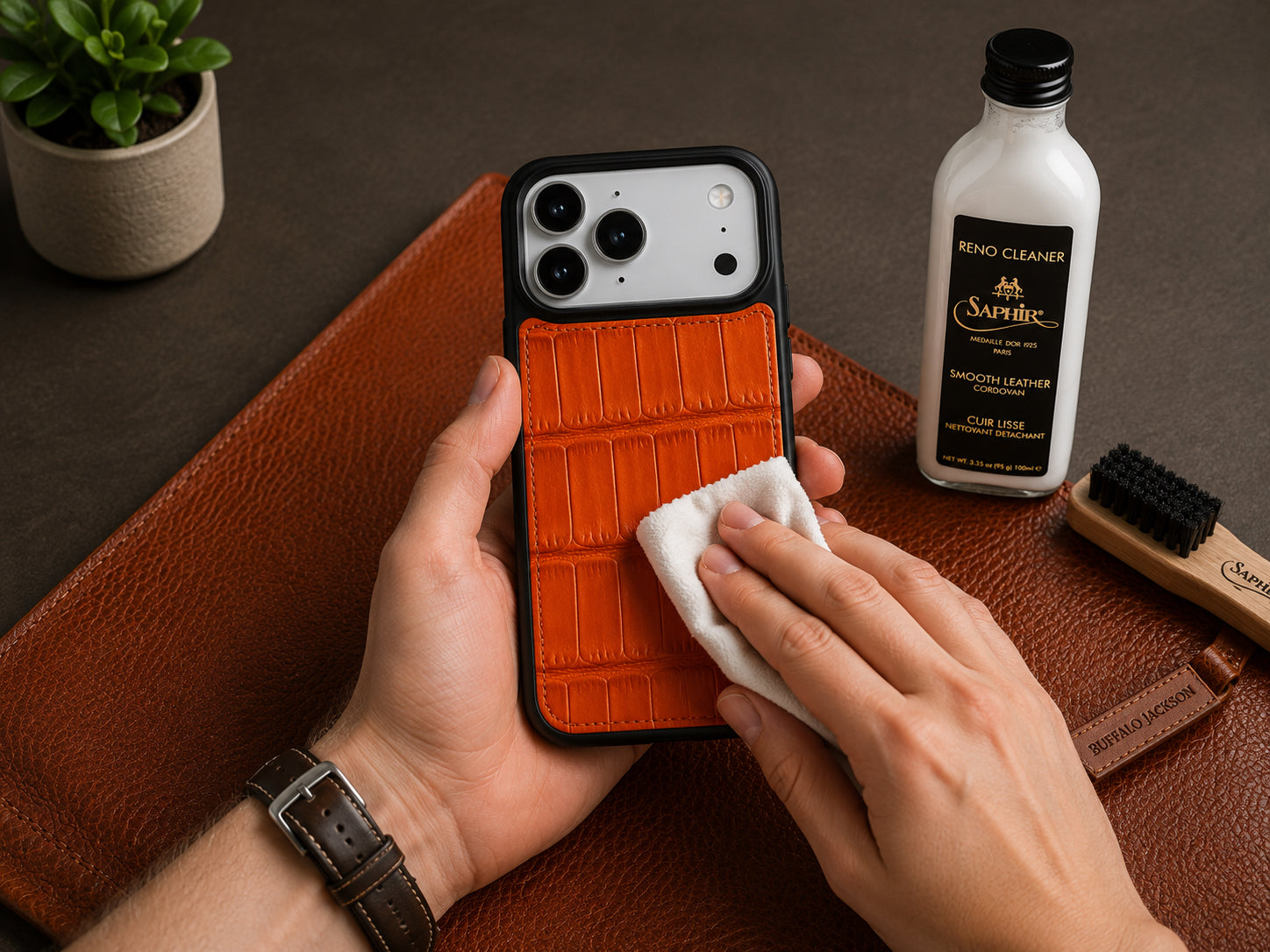
How to Clean a Leather Phone Case: A Complete Step-by-Step Guide
Most leather phone cases are damaged not by dirt, but by bad cleaning habits: too much water, harsh cleaners, alcohol on real leather, or heat drying. In most cases, safe cleaning is simple: remove the phone, wipe dust off first, use a barely damp cloth only when needed, and let the case dry naturally before putting it back on.
Quick Answer
What you need:
- a dry microfiber cloth
- a second soft cloth lightly dampened with water
- a small amount of mild soap if the case is actually dirty
- leather conditioner only if the case is real leather and feels dry afterward
Basic method:
- Remove the phone.
- Wipe off dust and loose dirt first.
- If needed, wipe the case with a barely damp cloth.
- If there is residue, use a tiny amount of mild soap, then wipe again with clean water.
- Dry the case with a towel and let it air-dry fully before using it again.
Biggest mistakes:
Too much water, harsh cleaners, alcohol on real leather, and trying to speed up drying with a hairdryer or heater.
In real use, most leather phone cases do not need a deep clean. A dry microfiber wipe solves more than people think. People usually damage the case when they try to “clean harder” with too much water, alcohol, household cleaners, or heat.
Before You Start: What You'll Need
Supply Checklist
- Mild, pH-neutral soap (e.g., Castile soap, baby shampoo, or dedicated leather cleaner such as Lexol pH or Leather Honey)
- 240 ml lukewarm water (approximately one cup; 15–25°C / 59–77°F)
- 2–3 microfiber cloths (or soft cotton; microfiber's tight weave minimizes scratch risk)
- Cotton swabs or soft-bristle brush for stitching and edges
- Leather conditioner (for genuine leather: lanolin-based emulsions for aniline; light carnauba wax blends for pigmented; avoid silicone-heavy products on full-grain)
- Optional: Disposable gloves, 70% isopropyl alcohol (faux leather only)
Why These Materials Matter
You do not need a complicated setup to clean a leather phone case safely. The goal is simple: remove surface dirt without soaking the material or damaging the finish. A soft dry cloth solves more than people expect. Water should be used lightly, and stronger cleaners should be avoided unless the manufacturer specifically allows them.
Cleaning Solutions: DIY vs. Commercial
DIY Approach
Soap and water (1:50 dilution):
Mix 1–2 drops mild soap (e.g., pH-neutral Castile) per 240 ml lukewarm water. Effective for daily maintenance, light dust, and fingerprints. Low risk of residue if rinsed properly.
When DIY is sufficient:
- Weekly wipe-downs
- Cases with protective topcoats (top-grain, pigmented)
- No heavy oils or sticky residues
Commercial pH-Balanced Cleaners
Examples: Lexol pH Leather Cleaner, Leather Honey Leather Cleaner, Chamberlain's Leather Milk
Formulation: Pre-balanced pH (~6.5–7.5), surfactants designed to emulsify oils without stripping dyes.
When commercial is preferable:
- Grease/oil stains (hand lotions, food oils)
- High-contact environments (gym bags, outdoor use)
- Delicate aniline leather (dedicated aniline cleaners minimize water exposure)
Application: Dab small amount on cloth, wipe in direction of grain. Follow with damp plain-water cloth to remove cleaner film.
Comparison Table
| Situation | Mild Soap + Damp Cloth | Dedicated Leather Cleaner |
|---|---|---|
| Dust, fingerprints, light surface dirt | Usually enough | Usually unnecessary |
| Sticky residue or skin-oil buildup | Try this first | May help if one gentle pass is not enough |
| Routine maintenance | Best starting point | Optional, not required |
| Unknown finish or delicate material | Safer first step | Use only if the product is clearly suitable |
| Heavy staining or repeated failed cleaning attempts | Do not keep repeating aggressively | May still be risky — specialist care or replacement may be better |
Step-by-Step Cleaning Process
Step 1 — Preparation
- Remove phone from case.
- Shake case to dislodge loose dust and debris.
- Wipe exterior and interior with a dry microfiber cloth—removes particles that could scratch during wet cleaning.
- Check for embedded items such as cards or cash if you are using a wallet case, and remove everything before cleaning. The same gentle-care approach applies to a leather wallet, since excess moisture and harsh cleaners can damage its finish.
Step 2 — Mixing the Solution
- Measure 240 ml (~1 cup) lukewarm water (15–25°C / 59–77°F).
- Add 1–2 drops mild, pH-neutral soap (e.g., Castile soap, baby shampoo, or dedicated leather cleaner).
- Stir gently until slightly foamy—excessive suds indicate too much soap, which leaves residue.
Use cool or slightly warm water, not hot. The cloth should feel only lightly damp. The goal is to loosen surface dirt without soaking the case or stressing the finish.
Step 3 — Cleaning
- Dampen a soft cloth with the soap solution—wring out thoroughly so cloth is damp, not dripping.
- Wipe the case surface in the direction of the grain (for smooth leathers, follow any visible texture lines; for pebbled/embossed, use consistent direction).
- Use light, even pressure—do not scrub or press hard on seams, edges, or stitching.
- Wipe the surface gently and do not let moisture collect around seams, edges, cutouts, or any built-in hardware. If the case has magnets or layered parts, keep the cloth only lightly damp and dry those areas carefully afterward.
Technique note: Circular motions can lift embedded grime but risk micro-abrasion on aniline leather; linear strokes with grain are safer. For pebbled surfaces without visible grain, use gentle, consistent direction.
Step 4 — Removing Residue
- Dampen a second clean cloth with plain lukewarm water (no soap).
- Wipe entire surface again, using same light pressure and grain direction.
- Ensure no soapy film remains—residue attracts dust and can leave streaks.
- Interior surface: Repeat dampened plain-water wipe if interior was soaped; dry interior corners with cotton swab.
Step 5 — Drying
- Pat case dry with a clean, dry microfiber towel—do not rub; blot to absorb surface moisture.
- Place case on a flat surface (not curved, not over a phone) in a well-ventilated area, away from:
- Direct sunlight (UV degrades dyes and oils)
- Heaters, radiators, hairdryers, or fans (rapid drying causes warping, cracking)
- Humid environments (slows drying, risks mildew on porous leather)
- Let the case air-dry fully at room temperature before putting it back on the phone.
- If case feels damp after 12 hours: Extend drying time. Leather and PU laminates require full moisture evaporation to regain original texture and prevent adhesive softening.
If the Case Feels Dry After Cleaning
If the case is real leather, it may feel drier after cleaning. In that case, use a very small amount of leather conditioner on a soft cloth and apply it lightly. Do not saturate the material, and do not keep layering more product because that can leave residue and make the surface feel greasy. If the case is faux leather, skip conditioner. If you are unsure, test a tiny amount on a hidden area first.
Real Leather vs. Faux Leather
Real leather is more sensitive to alcohol, soaking, and heat drying. Faux leather is less absorbent, but the surface coating can still dull, crack, or peel if you use strong cleaners too often. If the case is real leather, stick to the gentlest method possible and condition lightly only if it feels dry afterward. If it is faux leather, mild soap and a lightly damp cloth are usually enough. In both cases, avoid bleach, acetone, aggressive scrubbing, and direct heat.
Spot Cleaning: Common Stains and Spills
Immediate action prevents permanent set. General rule: blot, don't rub—rubbing spreads stain and pushes it deeper.
Stain Solutions — Quick Reference
| Issue | What to Do First | What to Avoid | When to Stop DIY |
|---|---|---|---|
| Fingerprints / skin oils | Wipe with a dry microfiber cloth, then use a barely damp cloth if needed | Soaking the case or using harsh cleaners | If the surface starts looking dull or color transfers to the cloth |
| Sticky residue | Use a tiny amount of mild soap on a cloth, then wipe again with clean water | Scrubbing hard or stacking multiple cleaners | If residue does not improve after one gentle attempt |
| Water exposure | Blot dry immediately and let the case air-dry fully | Hairdryer, heater, direct sun | If odor, staining, or warping appears after drying |
| Dye transfer | Blot and clean gently once; test first on a hidden area | Repeated rubbing or stronger solvents | If the stain remains or spreads |
| Alcohol gel / sanitizer | Wipe off residue gently and let the case dry naturally | More alcohol, aggressive rubbing, heat drying | If the finish looks dry, patchy, or damaged afterward |
| Mildew or persistent odor | Dry the case fully and ventilate it well | Random home remedies and repeated chemical treatment | If smell or visible growth remains |
When to seek professional help:
- Stain has penetrated aniline/nubuck grain
- Discoloration after initial cleaning attempt
- Dye transfer on light-colored leather
- Dried paint or bonded adhesive
- Cracking or finish peeling from spill damage
Damage Prevention: What Not to Do
Moisture Overload
Risk: Overwetting causes swelling, warping, weakened adhesives (especially in cases with internal linings or magnetic inserts), and salt rings from uneven drying.
Rule: Water should touch cloth only, not case directly. Cloth should be damp, not dripping.
Heat Exposure
Risk: Rapid drying from hairdryers, radiators, or direct sun causes:
- Loss of natural oils → cracking
- Warping of leather or PU laminate
- Color fading (UV degradation of dyes)
Rule: Always air dry at room temperature (18–24°C / 64–75°F) in shaded, ventilated area.
Chemical Damage
Risk: Harsh cleaners strip protective finishes, cause discoloration, dissolve synthetic coatings.
Prohibited substances:
- Bleach (chlorine bleach)
- Ammonia (glass cleaners, all-purpose cleaners)
- Acetone (nail polish remover)
- Paint thinner, mineral spirits
- Strong alkalis (oven cleaners, heavy-duty degreasers)
- High-concentration alcohol (>70% IPA for prolonged contact)
Rule: Stick to pH-neutral soaps or dedicated leather cleaners. Spot-test any new product.
Mechanical Stress
Risk: Scrubbing stretches leather fibers; pressing hard on aniline can burnish surface or create shiny patches.
Rule: Use light, even pressure; linear strokes with grain preferred over circular motion for delicate finishes.
Submersion/Machine Washing
Risk: Submerging or machine-washing leather cases dissolves adhesives, causes permanent deformation, strips finish, and may damage internal structural elements (cardholders, magnets).
Rule: Never submerge or machine-wash. Surface cleaning only.
Improper Storage
Risk: Prolonged contact with other surfaces (in pockets with keys, under direct sunlight on dashboard) causes:
- Scratches
- UV fading
- Heat damage
- Indentations or embossing from pressure
Rule: Store in dry, ventilated space (drawer, dedicated case slot), away from windows and heat sources. Avoid storing under pressure.
For preventive care routines, see next section.
Routine Maintenance and Preventive Care
For everyday use, a quick dry microfiber wipe is usually enough to remove dust, fingerprints, and skin oils. This routine is especially suitable for an iPhone 17 leather case, where regular gentle care helps preserve the surface without unnecessary deep cleaning. Pay extra attention to seams, cutouts, and the inside edges of the case where dirt tends to collect.
If the case starts looking dirty or feeling sticky, do one careful cleaning pass with a barely damp cloth and a tiny amount of mild soap if needed. If it is real leather and feels dry afterward, a light application of conditioner may help. Do not turn routine care into frequent deep cleaning, because overcleaning is one of the easiest ways to damage the finish.
Troubleshooting Common Issues
Discolored Leather
Cause: Sun exposure, dye bleeding from clothing (jeans), chemical contact, uneven drying after cleaning
Fix:
- Minor fading (sun): Regular conditioning may restore some depth; for severe fading, professional leather dye matching required.
- Dye transfer (e.g., from denim): For pigmented leather, pH-neutral cleaner may lift surface dye (test first); for aniline, dye penetrates grain—professional color restoration.
- Chemical discoloration (alcohol or harsh cleaners): May be permanent if finish stripped; professional refinishing or dye application needed.
Stubborn Stains
Approach:
- Identify stain type.
- Reapply recommended cleaner with spot-test protocol.
- If stain persists after second attempt, do not repeat—risk of finish damage.
- Consider professional leather restoration (dye, filler, or finish reapplication).
Water Damage / Salt Rings
Cause: Uneven drying; salts from water (especially hard water or winter road salt) concentrate at drying edge.
Fix:
- Dampen entire affected area lightly with distilled water to even out moisture.
- Air dry slowly and evenly at room temperature—avoid fans or heat.
- If ring persists, professional cleaning or dye touch-up may be required.
Cracking or Stiffness
Cause: Lack of conditioning, over-drying from heat exposure, age-related oil loss
Fix:
- Apply leather conditioner (for genuine leather)—may restore flexibility if cracks are superficial (surface micro-cracks).
- For deep cracks (splits through grain), professional filler or patching required.
- For bonded leather, cracking often indicates adhesive failure—may not be repairable.
My case smells like mildew—what should I do?
If the case smells musty, remove it from the phone and let it dry completely in a well-ventilated area. Do not keep experimenting with stronger cleaners or home remedies on leather. If the smell does not go away, or if you can see mildew or trapped moisture inside seams, replacement or specialist care is usually the safer option.
MagSafe Magnet Corrosion
If the case has magnets or metal inserts, keep those areas only lightly damp and dry them carefully afterward.
Water-Repellent Treatments: When and How
If you use the case outdoors a lot, extra protection may help, but it should never come before safe cleaning and full drying. Do not apply waterproofing sprays unless the product is explicitly suitable for your case material and finish. For most users, careful cleaning and keeping the case away from heat and moisture matter more than adding extra coatings.
When Conditioner Helps — and When to Skip It
Purpose: Replace natural oils lost during cleaning, maintain flexibility, protect finish.
When Conditioner Makes Sense
| Case Type | Should You Condition It? | Best Approach | Main Risk |
|---|---|---|---|
| Real leather that feels dry after cleaning | Yes, lightly | Apply a very small amount to a cloth, then buff off the excess | Using too much and leaving greasy buildup |
| Real leather that already feels normal | Usually not necessary right away | Do not add product just because you cleaned it once | Over-conditioning for no reason |
| Unknown material or unknown finish | Use caution | Test a tiny amount first or skip until you confirm the material | Unexpected darkening or residue |
| Faux leather | No | Skip conditioner and focus on gentle surface cleaning | Sticky film and dust buildup |
| Peeling, cracked, or damaged surface | Usually not a real fix | Do not rely on conditioner as a repair method | Wasting product on damage it cannot reverse |
Application Tips
- Amount: Pea-sized drop for entire phone case—less is more.
- Motion: Small, circular motions for even distribution.
- Absorption time: 10–15 minutes; longer for full-grain (up to 30 minutes for very dry leather).
- Buffing: Remove excess with clean cloth; over-conditioned leather feels greasy and attracts dust.
FAQ
Will cleaning affect the warranty?
Warranty rules vary by brand and by case design. If your case came with care instructions, follow those first. When in doubt, keep cleaning minimal: dry cloth first, then a lightly damp cloth, and avoid stronger products unless the manufacturer explicitly says they are safe for that material.
Can I use disinfecting wipes?
Use caution. Alcohol-based wipes can dry out real leather and may dull some coated surfaces over time. If the case is real leather, routine disinfection is better avoided unless the manufacturer explicitly allows it. If the material is synthetic, occasional use may be tolerated, but repeated use can still damage the finish.
Can I use baby wipes?
Not as a regular cleaning method. Many wipes leave residue, and some include ingredients that are not ideal for leather finishes. If you used one once, follow up with a clean damp cloth and let the case dry fully.
What should I do if my leather phone case gets wet (rain, spill)?
- Blot immediately with dry, absorbent cloth—do not rub.
- Remove phone from case.
- Pat case dry with microfiber towel.
- Air dry flat at room temperature (18–24°C / 64–75°F) in ventilated area, away from heat and sun—may take 6–12 hours.
- Do not use hairdryer, heater, or radiator—rapid drying causes warping and cracking.
- Once fully dry, apply conditioner (genuine leather) to replenish any lost oils.
- If the case shows salt rings, staining, or stiffness after drying, stop aggressive DIY cleaning and consider specialist care or replacement.
How can I prevent my leather phone case from discoloring?
Prevention:
- Limit sun exposure: Store in drawer or shaded area when not in use; UV fades dyes and dries oils.
- Avoid harsh chemicals: Keep case away from perfumes, hand sanitizer gel, cosmetics, and cleaning products.
- Regular conditioning (genuine leather): Maintains oils that protect dye stability.
- Separate from denim/dark fabrics: Dye transfer from jeans or bags can stain light-colored leather—store case separately or in protective sleeve.
If discoloration occurs:
- Minor fading: Conditioning may restore some depth.
- Dye transfer or chemical damage: Professional leather dye or color restorer required—test on hidden area first.
Can denim dye transfer be removed from a leather phone case?
It depends on leather type and how long the dye has been there.
- Pigmented leather (top-grain with protective topcoat): Fresh dye transfer may be lifted with pH-neutral leather cleaner and gentle circular motion—spot-test first. If stain has set (>24 hours), success rate decreases; professional color restoration may be needed.
- Aniline leather (no topcoat): Denim dye penetrates unprotected grain—very difficult to remove without stripping existing dye. Professional dye matching and reapplication often required.
- Prevention: Store light-colored leather cases separately from denim pockets or bags; consider protective sleeve.